In The Bulwark, Director of Research Alice Marwick writes about why right-wing politicians and influencers have embraced AI slop.

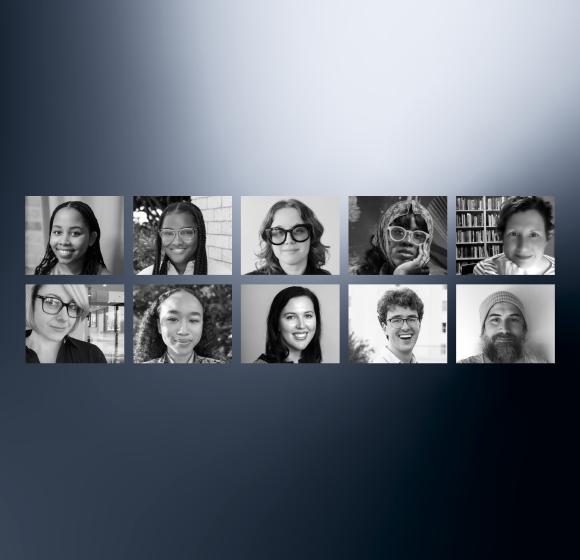
Data & Society (D&S) is pleased to welcome ten new affiliates, joining a group of researchers, thinkers, and advocates who actively collaborate with the organization to advance its mission. Each affiliate brings a unique understanding of how technology interacts with social institutions and systems of power, and works to ensure that tech is developed and deployed in the public interest. Affiliates may participate in funded research projects, engage in public conversations and curated convenings, or share knowledge with our community through monthly network forums.
The affiliates program provides an avenue for advancing collective power for the tech justice field through empirical, sociotechnical research. While affiliates are nominated by a specific member of our staff, they are strongly encouraged to take part in programs and events at D&S that are outside of their main research field to support interdisciplinary knowledge exchange. Previous and current affiliates have produced reports, primers, policy briefs, and blog posts (including the recent policy brief The “Privacy” Trap: How “Privacy-Preserving AI Techniques” Mask the New Worker Surveillance and Datafication and the Points piece Fashion’s Data Doubles), and have participated in D&S-led events, including Resisting Predatory Data.
“I am deeply grateful and honored to welcome this remarkable group of affiliates to Data & Society,” said Ania Calderon, managing director of strategy and engagement. “At a moment when working together in coalition is more important than ever, their diverse brilliance and commitment will help us advance our shared goal of shaping a future where people come before technology. Their perspectives and expertise will not only strengthen our work, but also expand our collective impact.”
D&S affiliates are formally nominated by current D&S staff and approved by senior leadership. Affiliate status is reviewed on a yearly basis. If you’re interested in learning more about our affiliate program or connecting with our network, contact [email protected].
The new affiliates are:
Kiara Childs previously served as Data & Society’s research editor, working alongside the organization’s researchers to ensure rigorous editorial review of reports, primers, academic publications, and other outputs. This role was supported by the 2023 ACLS Leading Edge Fellowship. Kiara holds a PhD from the Department of Communication at the University of North Carolina, Chapel Hill. While at UNC, she worked as a graduate teaching instructor and communications specialist. Her own research, which has been published in Social Media + Society, explores the intersection of Black women’s digital and beauty culture.
Mar Hicks is an author, historian, and professor doing research on hidden histories of computing, as well as the history of labor and technology. An associate professor at the University of Virginia’s School of Data Science in Charlottesville, Mar teaches courses on the history of technology, computing and society, and the larger implications of powerful and widespread digital infrastructures. Their research focuses on how gender and sexuality bring hidden technological dynamics to light, and how the experiences of women and LGBTQIA people change the core narratives of the history of computing in unexpected ways. Mar’s multiple award-winning book, Programmed Inequality, looks at how the British lost their early lead in computing by discarding women computer workers, and what this cautionary tale tells us about current issues in high tech. They are also co-editor of the book Your Computer Is On Fire (MIT Press, 2021), a volume of essays about how we can begin to fix our broken high tech infrastructures, and an associate editor of the IEEE Annals of the History of Computing.
Harry Hudome is a doctoral student at the University of Pennsylvania’s Annenberg School for Communication. His research explores topics related to digital platforms, content creation, and the experience economy, with a particular focus on the photography and live events industries. Harry previously provided administrative and research support to D&S’s director of research, Alice Marwick, and served the development team as grants writer and editor, working closely with researchers to secure funding for their projects and report on the impact of their work. He holds a master’s degree in media, culture, and technology from the University of Virginia and a bachelor’s in communication studies from James Madison University.
Shannon Mattern is the Penn Presidential Compact Professor of Media Studies at the University of Pennsylvania; director of creative research at the Metropolitan New York Library Council; and the Kluge Chair in Modern Culture at the Library of Congress. Her writing and teaching focus on media architectures and information infrastructures. From 2004 to 2022, she served in the Department of Anthropology and the School of Media Studies at The New School in New York. Shannon has written and (co-)edited books and digital collections about libraries, maps, and urban intelligence. She contributes regularly to public design and interactive projects, and she writes a column about urban data and mediated spaces for Places Journal.
Joan Mukogosi is a social scientist conducting research, shaping strategy, and providing commentary at the intersection of technology, health, and identity. A sociologist by training and an Afrofuturist by vocation, Joan’s work interrogates how Black lives are represented in health data, how health experts contemplate digital documentations of race, and the relationship between anti-Black racism, artificial intelligence, and electronic health records. Joan is a sociology PhD candidate at the London School of Economics and a fellow at the Black Beyond Data Lab, where she helps to convene the Community Health Informatics advisory group.
Miliaku Nwabueze is a chaos orchestrator, glitch enthusiast, and constellation architect born in Detroit, rooted in Atlanta, and tinkering away in liminality. A 2024-2026 Just Tech fellow, her current focus is digital marronage, or attempting a collective exodus from the hegemonic web. Queer, Black, and Igbo, she writes, designs, and dances toward the endings of this world. Relationships are her medium.
Marie-Therese Png is a facilitator and investigative researcher working in transnational alliance-building at the intersections of tech infrastructure, resource justice, and critical security studies. She holds a strategic role within the Green Screen Coalition, building coalitions in geographies such as Taiwan, Malaysia, Brazil, Chile, and Costa Rica. In this vein, she creates Afro-Asian diasporic dialogues, and political and epistemic analyses, with intergenerational culture workers and transnational movement builders from African and Asian diasporas. She held previous roles at the United Nations and DeepMind, and was a research scholar at the Institute of Advanced Studies where she studied the geopolitics of AI industry supply chains, including physical infrastructure and critical minerals. She is completing her PhD at the Oxford Internet Institute on these topics.
Jess Reia is an assistant professor of data science at the University of Virginia, where they co-lead the Digital Technology for Democracy Lab, and a 2025 Andrew Carnegie fellow. They are also a visiting scholar at Fudan University and a non-resident fellow at the Center for Democracy & Technology. Jess works primarily on topics of technology policy, data justice, human rights, and urban governance. A policymaker by training, they have collaborated with governments for over a decade and conducted research that has been published in four languages. Jess is also a public scholar whose writing and interviews have been featured in numerous outlets, including Estadão, Le Devoir, and BBC. Before joining UVA, they were appointed Mellon postdoctoral researcher at McGill University and worked at the Center for Technology & Society at FGV Law School in Rio de Janeiro.
Melinda Sebastian previously served as a senior policy analyst with D&S’s Public Technology Leadership Collaborative (PTLC), where she worked on fostering tech policy in the public interest. That work included authoring the PTLC’s monthly “Circle Back” newsletter, leading a group of early career tech policy researchers, and highlighting sociotechnical rights-focused research practices to academic, industry, federal, local, and civil society members of the PTLC. Melinda’s research utilizes an intersectional ethical approach that focuses on structural inequalities in emergent ethical issues in media, technology, and information policy. Her areas of expertise include surveillance and privacy, AI, sociotechnical design, epistemicide, and platform governance issues including net neutrality, content moderation, and legislative approaches to automation/algorithmic decision-making. She holds a PhD in Culture, Communication, and Media from Drexel University.
Émile P. Torres is a moral philosopher, intellectual historian, and journalist whose work focuses on the ethics of emerging technologies — especially AI — and human extinction. They have published four books, the most recent of which is Human Extinction: A History of the Science and Ethics of Annihilation (Routledge 2024). In 2023, with Dr. Timnit Gebru, they coined the acronym “TESCREAL” to denote a constellation of ideologies that have played an integral role in launching, sustaining, and accelerating Silicon Valley’s race to build artificial general intelligence. Émile has published in a wide range of academic journals, including Synthese, Inquiry, Bioethics, Metaphilosophy, and Futures, as well as popular media outlets including The Washington Post, The New Statesman, The Los Angeles Review of Books, Bulletin of the Atomic Scientists, and Aeon. They are a contributing writer at Truthdig and, formerly, Salon. Émile earned a bachelor’s degree in philosophy, with honors, from the University of Maryland, College Park, and a MS in neuroscience from Brandeis University. In 2023, they received their PhD in philosophy from Leibniz Universität Hannover in Germany, and are currently a postdoctoral scholar at the Inamori International Center for Ethics and Excellence at Case Western Reserve University.