Regional Diversity in Autonomy and Work: A Case Study from Uber and Lyft Drivers
Published on October 13, 2016
D&S researchers Alex Rosenblat and Tim Hwang explore “the significant role of worker motivations and regional political environments on the social and economic outcomes of automation” in this new paper.
Preliminary observations of rideshare drivers and their changing working conditions reveals the significant role of worker motivations and regional political environments on the social and economic outcomes of automation. Technology’s capacity for social change is always combined with non-technological structures of power—legislation, economics, and cultural norms.
Related Resources


Report
April 1, 2026
Last Place in the AI-First Economy: How the AI Industry Relies on Worker Disempowerment
Alexandra Mateescu, Aiha Nguyen, and Sanjay Pinto argue that the sprint to create the so-called AI-first economy must be understood not as the logical march of progress, but as a…
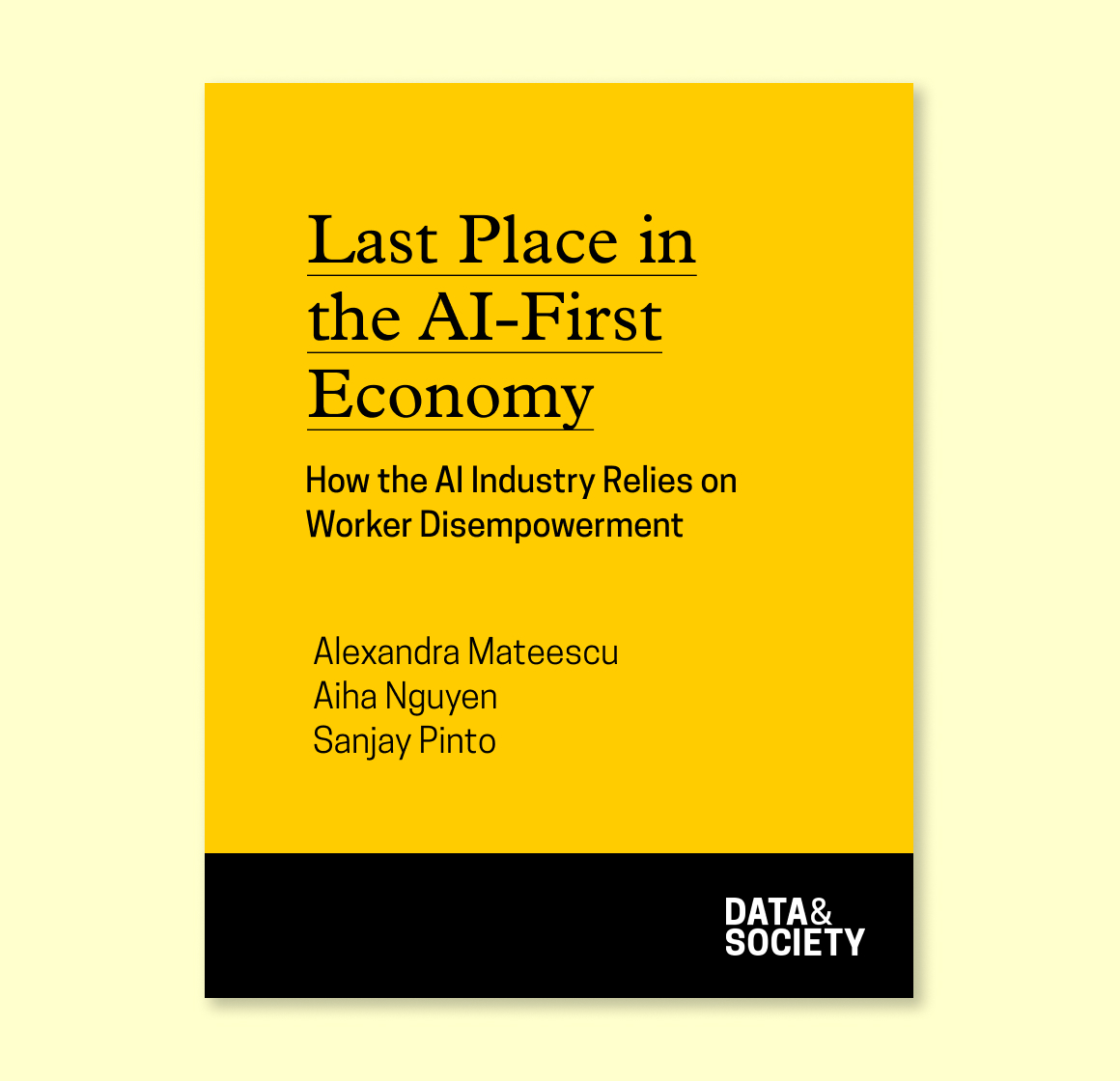
Last Place in the AI-First Economy: How the AI Industry Relies on Worker Disempowerment
Alexandra Mateescu, Aiha Nguyen, and Sanjay Pinto argue that the sprint to create the so-called…
April 1, 2026
Report
Policy brief
February 4, 2026
(404) Job Not Found: What Workforce Training Can’t Fix for Black Atlantans in the Age of AI

February 4, 2026
Policy brief
Blog post
January 28, 2026
“AI Can’t Do Nothing With Us!”: Inside One Atlanta Workforce Training Program

January 28, 2026
Blog post