Assembling Accountability: AI, Power, and Community Agency

Over the past three years, Data & Society reached millions through our Algorithmic Impact Methods Lab (AIMLab) project, equipping local communities with the knowledge to assess the impact of AI tools. In partnership with community groups, policymakers, government leaders, unions, and regulatory bodies, we built research and toolkits that the affected communities themselves helped shape.
AIMLab emerged because of a clear gap: communities most affected by AI were not being consulted before these high-stakes technologies were deployed. Our participatory research approach changed that dynamic, centering new voices and broadening who gets to shape consequential decisions about how AI is adopted and used.
Two key partnerships during this period illustrate the scale of our impact. Working with the City of San José and the GovAI Coalition, we were connected with an extensive network of civil servants who wanted to make informed decisions about AI and better engage constituents. Through these partnerships, we were able to provide frameworks and turnkey materials for city IT departments about AI adoption, evaluation, and community engagement, and were invited to play a role in establishing AI best practices. AIMLab became a key driver for engaging their communities, helping scale AI resources and education materials for more than 900+ cities, countries, states, district authorities, tribal governments, and federal agencies.
This project’s success laid the foundation for AI Civics, a collaborative program aimed at extending and strengthening channels and building knowledge for key sectors and the public to have a voice in how AI is designed and deployed. As the program’s director, Dr. Meg Young, explained:
“Many people have told us that they feel disempowered and forced into a reactive position to AI adoption. It’s being rapidly rolled out in schools and workplaces, and students, families, and workers are not being consulted or included as part of the decision-making process. Communities are demanding more influence over how AI enters their lives; we aim to support and amplify levers for exerting agency over these experiences.”
Our AI Civics program began in 2026 with a partnership with the Digital Public Library of America (DPLA), which works with American libraries to ensure equitable access to knowledge in the digital age. Over the coming months and years, AI Civics will build a national civic coalition dedicated to ensuring that people and communities know how to influence local decisions about how AI is used in and around their daily lives.
Beyond the Hype: What AI Is Actually Doing to Workers

While public debate about AI and work has been dominated by speculation about everything from mass unemployment to endless efficiency, workers themselves are facing a more complicated reality. Data & Society has spent time moving past hype cycles to produce research focused on how workers are negotiating, resisting, and shaping their relationships to these new workplace technologies.
One of our first research inquiries looked at how algorithmic accountability measures could and should be applied to the use of AI tools in hiring processes. We released two studies on New York City’s Local Law 144, which subjected employers using AI decision-making tools to annual bias audits — the first law to require such audits for commercial systems. This work was recognized with a “Best Paper” award at the 2024 ACM FAccT conference in Rio de Janeiro.
We’ve since shifted our focus onto how workers themselves are impacted by the rise of AI in the workplace. Our primer, Generative AI and Labor: Power, Hype, and Value at Work, looked beyond speculation to the on-the-ground realities of expertise, compensation, accountability, and professional ethics. This empirically grounded counternarrative has been widely cited, quoted, and shared in a diverse range of publications, including The Guardian, MSN UK, and Marie Claire.
Data & Society’s work to date has made clear that understanding AI’s full impact on workers requires a cross-sector lens. Our primer, Last Place in the AI-First Economy, identified that AI’s entrenchment in the workforce relies on four components: weaponized efficiency, institutional capture, occupational erosion, and racial and structural inequity. These distinctions cut across sectors, industries, occupations, and classes, as further evidenced in our report (404) Job Not Found, which focused specifically on how Black workers in Atlanta are being trained for AI. As Labor Futures Program director Aiha Nguyen explains:
“To build a different future — one that integrates AI with a worker-first approach, not only industry agendas — requires us to understand and change the structures of power, control, and ideology behind AI adoption in the workplace.”
In 2026 we are launching a new cross-sector research project that will provide a grounded analysis to identify constituencies for engagement and organizing, point to policy priorities, and identify opportunities for building different kinds of solidarities across movements. As AI is further embedded across workplaces around the world, this work is essential: without intervention, workers will continue to be excluded from the conversation about how, whether, and when AI should be deployed.
The Hidden Costs of AI: Who Pays When a Data Center Moves In?
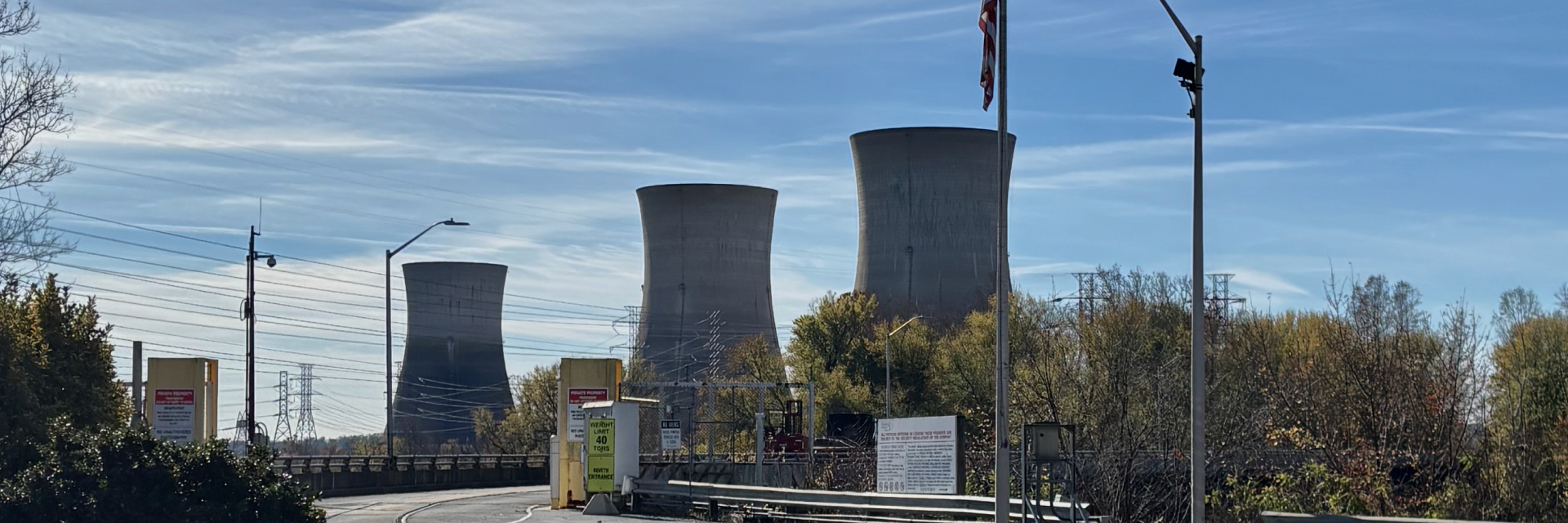
Before AI can be deployed, it requires physical infrastructure — buildings, wires, chips, power, water, and land. Data & Society has spent years making that complex infrastructure visible, raising the sociopolitical implications of these investments, and arguing that the people living among it should determine what gets built, where, and what impacts should be borne by the surrounding communities.
We began this work focusing primarily on data centers’ environmental impacts in leading tech corridors. Our research on California and Virginia showed that these infrastructures had significant consequences for energy consumption, land use, and local communities — consequences that are rarely acknowledged in the industry’s promises of growth and prosperity.
Alongside this place-based research, Dr. Tamara Kneese led a research inquiry focused on tech workers and environmental coalitions who are actively grappling with these same unfulfilled promises and environmental harms. Our report Turning the Tide: Climate Action In and Against Tech documents how workers inside the industry are thinking about, and organizing around, the climate consequences of AI’s infrastructure buildout.
These cases raise important questions about American industrial policy and the implications of leaning on AI’s infrastructural buildout as this era’s national project. This broadens our view to Pennsylvania, by some measures the next AI infrastructure corridor and a new iteration of the “Manhattan Project.” In a series of articles, policy briefs, and public engagements, we examined how the region’s long industrial legacy and position as a key energy exporter are being actively leveraged by tech and energy companies, unions, and government leaders to attract AI investment, including a nuclear revival tied to AI’s growing energy demands. This work has focused on not only the political and environmental implications of this expansion, but on how local communities are leading democratic practice when it comes to industrial policy around artificial intelligence. Maia Woluchem and Dr. Livia Garofalo explored the state’s transformation In their article “Pennsylvania is Perfect,” warning of “a profound transfer of power from public budgets and public power to the whims of private industry and investment.”
As we argue in our policy brief Pennsylvania’s Power, local government is not a barrier to AI development, but a necessary check on who bears the costs and who will benefit from AI’s localized impacts. Each Pennsylvania town is an increasingly critical component of AI’s global supply chain, and as such, a node of our shared economic future — boom or bust. In late 2026 we will release a complete report on our findings in Pennsylvania, arguing that the state is not an outlier, but a signal for how AI infrastructure decisions are increasingly understood on the ground. The lessons from Pennsylvania are essential to understanding how power is exercised in this AI era and whose visions will ultimately decide our tech-enabled future.
All of this work has brought us to a sharper focus on AI industrial policy: who has the authority to make decisions about the impacts of AI infrastructure, and how communities can meaningfully shape those decisions. As AI data centers and energy infrastructures continue to expand into new regions, our ongoing research will provide the empirical foundations that can drive better decisions, organizing, and policymaking for our future.
The Rise of AI-Supported Healthcare: Safeguarding Patients and Healthcare Workers

Healthcare has always been shaped by power: who is listened to and insured, who bears the risk, and who profits from these systems. With the rise of digital platforms and AI, we are seeing these dynamics accelerate without corresponding protections for healthcare workers and patients. Over the past several years, Data & Society has examined what happens when technology compounds existing harms in care settings, who gets left out, and what accountability could actually look like.
We started this work by listening to healthcare professionals working alongside these systems. Our researchers spoke with therapists navigating the rise of teletherapy platforms and found that the changing conditions of therapeutic labor are gradually redefining therapeutic work. We have also chronicled the integration of AI tools into clinical settings, such as the integration of Sepsis Watch into the Duke Health system, and repeatedly saw the same result: these systems were eroding the professional norms that make good care possible in the first place.
We then turned to how patients, both those in clinical settings and those seeking help outside them, are being impacted by new technologies. Our research into data infrastructures and the Black birthing experience uncovered how technology is reshaping the delivery of maternity care and how one of the most acutely harmed groups in American healthcare is bearing the cost.
Most recently, we’ve been focusing on one of the fastest-moving and least-regulated arenas in digital health: how AI chatbots are being used as a tool for mental health support. Data & Society researchers have spent over a year talking to chatbot users, therapists, clinicians, designers, developers, and policymakers to understand how people turn to these tools for emotional support and mental health care. What they found, as researcher Dr. Briana Vecchione writes, is that people aren’t confused about whether chatbots are human, and they are not unaware of the risks to their data. What draws them in are affordances that map onto prior failures in the care landscape, including availability, low cost, perceived privacy, and freedom from judgment. The same features that make these systems feel trustworthy and accessible are those that produce harm in the absence of clinical accountability. As researchers Dr. Ranjit Singh and Dr. Livia Garofalo wrote in Undark:
“The issue is not just that the bots talk; it’s that the system is designed to keep you talking. This form of predatory companionship emerges in subtle ways. Unlike a mental health professional, chatbots might ignore, or even indulge, risk signals such as suicidal ideation and delusional thinking, or offer soothing platitudes when urgent intervention is required.”
That dynamic is especially dangerous for people in crisis, for whom the response of a clinically unqualified chatbot may be all they have to turn to. Data & Society took that case directly to policymakers through a March 2026 policy brief recommending design constraints and accountability mechanisms at the state level; in a formal comment submitted to the FDA, we argued that if a chatbot looks and acts like therapy, a disclosure requirement notifying users that they are interacting with AI is not enough regulatory protection. Later in 2026, we are releasing a report that brings all this work together, providing the concrete empirical understanding required to make more equitable decisions about how this care is designed, used, evaluated, and regulated.
Across all of this work, the throughline is the same: technology is being deployed in care contexts faster than accountability structures can keep up. Data & Society works to help close that gap by centering the experiences of the workers, patients, and communities who feel the consequences first.