

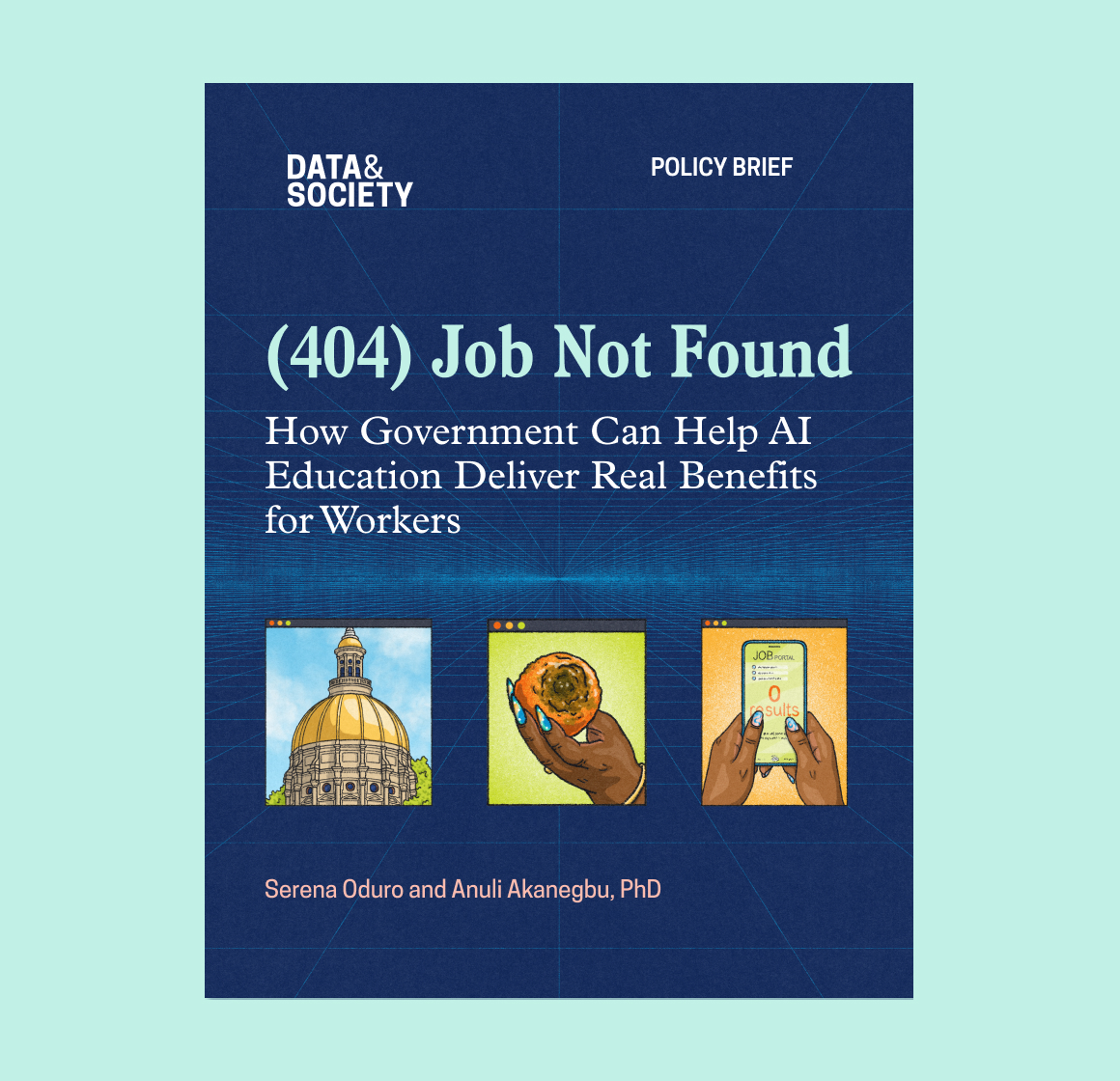
In cities across the country, workers — especially those from disadvantaged backgrounds — are grasping in the dark when it comes to AI. Many are taking online courses and enrolling in training bootcamps, aiming to “get a foot in the door,” only to find that the door leads to short-term, low-wage, and unsteady work. Even with the desire to build their AI literacy skills, workers find themselves unable to engage in educational programs while saddled with the myriad responsibilities required to get by day to day.
In this brief, Policy Manager Serena Oduro and Researcher Anuli Akanegbu (author of the report (404) Job Not Found: What Workforce Training Can’t Fix for Black Atlantans in the Age of AI) lay out recommendations aimed at ensuring that AI literacy efforts — at the federal, state, and local levels — actually address the struggles and needs of American workers. They consider AI literacy as part of a broader category of digital skilling, and show that investments in workers’ skills can be most valuable when connected with efforts to address the broader socioeconomic conditions that shape people’s lives and work.