Policy brief
April 8, 2026
Pennsylvania’s Power: Why Local Authority Is the Key to AI Infrastructure Decisions

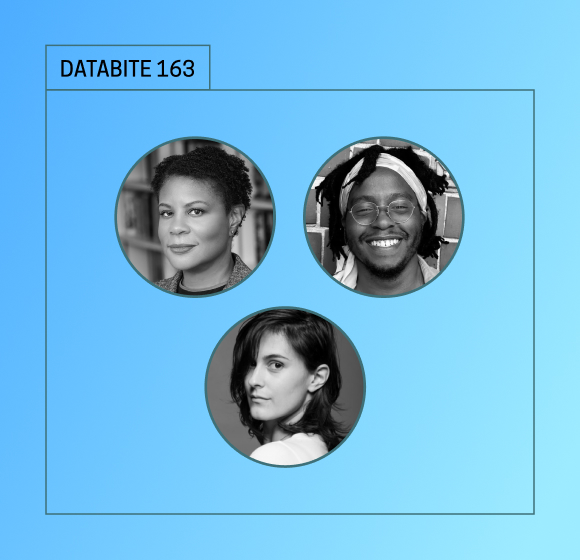
Jenna Burrell, Director of Research at Data & Society, in conversation with Anne Washington, Assistant Professor of Data Policy at NYU, and Deirdre Mulligan, Professor in the School of Information at UC Berkeley. Part one in a series of three Conversations on The Datafied State. The role of government is distinct from the private sector. Governments serve the public and prioritize values beyond market fit and return on investment. Governments interface with advocacy groups, unions, and other publics and not just individuals. In their approach to solving problems using computational, data-driven systems, governments have an opportunity to model responsible, accountable, and accessible tech. But what exactly would it mean for that tech to be in “the public interest,” and how are such publics constituted?
What Is the Public Interest?
The role of government is distinct from the private sector. Governments serve citizens and constituents rather than customers, and they interact with advocacy organizations, unions, and other groups, not just individuals. This means they prioritize values beyond market fit and return on investment — and it means governments have an unmatched opportunity to model responsible, accountable, and accessible tech. But what exactly would it mean for that tech to be in “the public interest,” and who is included in, and excluded from, that “public”?
About the Speakers
Jenna Burrell is the director of research at Data & Society and a professor at the School of Information at UC Berkeley.
Anne Washington is an assistant professor of Data Policy at NYU and director of the Digital Interests Lab.
Deirdre K. Mulligan is a professor in the School of Information at UC Berkeley, faculty director of the Berkeley Center for Law & Technology, and a co-organizer of the Algorithmic Fairness & Opacity Working Group.
Resources
Opportunities
References
Relevant Material
Places
Credits and Acknowledgments
Producer: Rigoberto Lara Guzmán
Editorial: Eryn Loeb
Social Media: Alessandra Erawan
Web: Chris Redwood
Post-Production: Kara Constantine
Additional support was provided by Data & Society’s Network Engagement, and Accounting teams.