

The Hidden Costs of AI: Who Pays When a Data Center Moves In?
Before AI can be deployed, it requires physical infrastructure — buildings, wires, chips, power, water, and land. Data & Society has spent years making that complex infrastructure visible, raising the sociopolitical implications of these investments, and arguing that the people living among it should determine what gets built, where, and what impacts should be borne by the surrounding communities.
We began this work focusing primarily on data centers’ environmental impacts in leading tech corridors. Our research on California and Virginia showed that these infrastructures had significant consequences for energy consumption, land use, and local communities — consequences that are rarely acknowledged in the industry’s promises of growth and prosperity.
Alongside this place-based research, Dr. Tamara Kneese led a research inquiry focused on tech workers and environmental coalitions who are actively grappling with these same unfulfilled promises and environmental harms. Our report Turning the Tide: Climate Action In and Against Tech documents how workers inside the industry are thinking about, and organizing around, the climate consequences of AI’s infrastructure buildout.
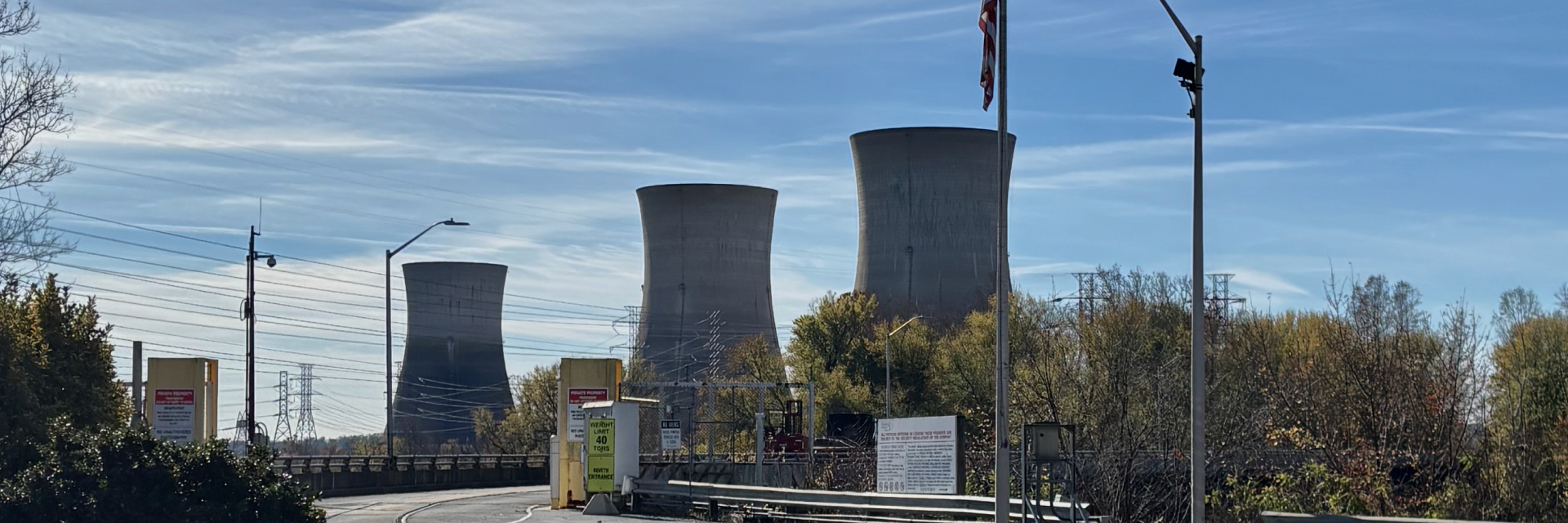
These cases raise important questions about American industrial policy and the implications of leaning on AI’s infrastructural buildout as this era’s national project. This broadens our view to Pennsylvania, by some measures the next AI infrastructure corridor and a new iteration of the “Manhattan Project.” In a series of articles, policy briefs, and public engagements, we examined how the region’s long industrial legacy and position as a key energy exporter are being actively leveraged by tech and energy companies, unions, and government leaders to attract AI investment, including a nuclear revival tied to AI’s growing energy demands. This work has focused on not only the political and environmental implications of this expansion, but on how local communities are leading democratic practice when it comes to industrial policy around artificial intelligence. Maia Woluchem and Dr. Livia Garofalo explored the state’s transformation In their article “Pennsylvania is Perfect,” warning of “a profound transfer of power from public budgets and public power to the whims of private industry and investment.”
As we argue in our policy brief Pennsylvania’s Power, local government is not a barrier to AI development, but a necessary check on who bears the costs and who will benefit from AI’s localized impacts. Each Pennsylvania town is an increasingly critical component of AI’s global supply chain, and as such, a node of our shared economic future — boom or bust. In late 2026 we will release a complete report on our findings in Pennsylvania, arguing that the state is not an outlier, but a signal for how AI infrastructure decisions are increasingly understood on the ground. The lessons from Pennsylvania are essential to understanding how power is exercised in this AI era and whose visions will ultimately decide our tech-enabled future.
All of this work has brought us to a sharper focus on AI industrial policy: who has the authority to make decisions about the impacts of AI infrastructure, and how communities can meaningfully shape those decisions. As AI data centers and energy infrastructures continue to expand into new regions, our ongoing research will provide the empirical foundations that can drive better decisions, organizing, and policymaking for our future.